| Historical
Gurdwaras of Punjab Guru Arjan Dev |
 |
The Spiritual Center of Sikhism
Sri Harmandir Sahib (The Golden Temple), Dist. Amritsar
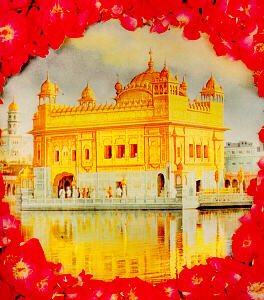 The
Harmandir Sahib (meaning Temple of God) is also commonly known as the
Golden Temple or Darbar Sahib (Divine Court). The Golden Temple is a living
symbol of the spiritual and historical traditions of the Sikhs. It is
a source of inspiration for all Sikhs and their chief place of pilgrimage.
The temple with it's glistening gold covered exterior stands in the middle
of the tank of nectar. The Harmandir Sahib has entrances and doors on
all four sides. Guru Arjan Dev exclaimed; "My faith is for the people
of all castes and all creeds from whichever direction they come and to
whichever direction they bow." Guru Amar Das asked Ram Das to build a
central place of congregation for the Sikhs. Guru Ram Das started excavation
work in 1577 during his lifetime. Guru Arjan Dev completed excavation
of the Tank known as Amritsar (The Pool of Nectar) in 1588. Guru Arjan
Dev then started construction of the Temple building itself which was
finally completed in 1601. The first edition of the Holy Book of the Sikh's
The Guru Granth Sahib was installed there in 1604 with Baba Buddha as
the first granthi (caretaker of the book). The last Sikh Guru to live
in Amritsar was Guru Hargobind. In 1664 Guru Tegh Bahadur visited The
Golden Temple but was refused entry by the corrupt temple caretakers,
the Masands. The Golden Temple has always been a rallying point for Sikhs
throughout it's history. Around 1740 Massa Ranghar, the Muslim ruler of
Amritsar desecrated the Temple by using it as a dancing hall. He was killed
by the Sikh hero Mahtab Singh. In 1761 the Afghan Ahmed Shah Abdali blew
up the Temple and filled in the Sacred Tank with refuse. The great Sikh
martyr Baba Deep Singh laid down his life in revenge. The construction
of the Golden Temple as it appears today was begun in 1764 when Jassa
Singh Ahluwalia laid the foundation stone. Many of the doors, walls and
domes were covered with copper sheets overlaid with gold during the reign
of Maharaja Ranjit Singh. The Golden Temple was partially damaged by the
military invasion of the Indian Army during June 1984. The
Harmandir Sahib (meaning Temple of God) is also commonly known as the
Golden Temple or Darbar Sahib (Divine Court). The Golden Temple is a living
symbol of the spiritual and historical traditions of the Sikhs. It is
a source of inspiration for all Sikhs and their chief place of pilgrimage.
The temple with it's glistening gold covered exterior stands in the middle
of the tank of nectar. The Harmandir Sahib has entrances and doors on
all four sides. Guru Arjan Dev exclaimed; "My faith is for the people
of all castes and all creeds from whichever direction they come and to
whichever direction they bow." Guru Amar Das asked Ram Das to build a
central place of congregation for the Sikhs. Guru Ram Das started excavation
work in 1577 during his lifetime. Guru Arjan Dev completed excavation
of the Tank known as Amritsar (The Pool of Nectar) in 1588. Guru Arjan
Dev then started construction of the Temple building itself which was
finally completed in 1601. The first edition of the Holy Book of the Sikh's
The Guru Granth Sahib was installed there in 1604 with Baba Buddha as
the first granthi (caretaker of the book). The last Sikh Guru to live
in Amritsar was Guru Hargobind. In 1664 Guru Tegh Bahadur visited The
Golden Temple but was refused entry by the corrupt temple caretakers,
the Masands. The Golden Temple has always been a rallying point for Sikhs
throughout it's history. Around 1740 Massa Ranghar, the Muslim ruler of
Amritsar desecrated the Temple by using it as a dancing hall. He was killed
by the Sikh hero Mahtab Singh. In 1761 the Afghan Ahmed Shah Abdali blew
up the Temple and filled in the Sacred Tank with refuse. The great Sikh
martyr Baba Deep Singh laid down his life in revenge. The construction
of the Golden Temple as it appears today was begun in 1764 when Jassa
Singh Ahluwalia laid the foundation stone. Many of the doors, walls and
domes were covered with copper sheets overlaid with gold during the reign
of Maharaja Ranjit Singh. The Golden Temple was partially damaged by the
military invasion of the Indian Army during June 1984. |
(Page 1 of 16)
   |

Note: No graphics or photographs
from The Sikhism Home Page
may be reproduced or used on another web site or for any other
means without express written permission from Sandeep Singh Brar.