|
Century of Struggle and Sucess The Sikh Canadian Experience by Sandeep Singh Brar Part I The Struggle Begins |
|
In September 1907 thousands of members of the Asiatic Exclusion League, a group dedicated to removing all non-Asiains from Canada rioted through the streets of Vancouver, beating and looting immigrants. Reacting to the anti-immigrant paranoia the Canadian parliament acted to effectively shut the door on Sikh immigration. They passed a law in January of 1908 requiring ‘All immigrants seeking entry must come to Canada by continuous journey and through tickets from the country of their birth or nationality or citizenship.’ The government knew full well that there were no direct shipping services between India and Canada as there were between Canada and Japan and China. Another law was passed in June of 1908 required every East Indian to have $200 in savings to land, while European immigrants only needed $25. This was a phenomenal amount considering that average Indian wages were only a few cents a day. Both of these laws were not applicable to any person born in India of European parents, only to native Indians.
"Dear Sir: Yours faithfully,
"The Sikh is a willing worker; there is not a lazy bone in his body. And in this land of freedom, where white man is entitled to life, liberty and the pursuit of happiness, the brown-faced Sikh has been taught to expect no more than mere license to live. They have been here for some time and have saved a good deal of money, and many of them have bought property and have what we call in our free Canadian speech a good stake in the country. Many would like to bring their wives and families from India and settle down to live permanently in Canada. Why they should not be encouraged to do this is hard to understand. They are intelligent men, physically well made. They have few religious or caste prejudices (or perhaps that is not a good word). Time will rub these out of them. They do not worship idols like the East Indians, who practice the Hindu religion. The Sikh religion is practically Christianity, if Christian teachings were followed closely. They are against immoderate liquor. They do not use opium or any of the drowsy syrups of the Orient. They have no more criminal tendencies than other men." (British Columbia Magazine) |
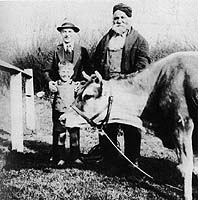 Despite a series of setbacks, separated from their wives and children the Sikh pioneers stubbornly persisted and prospered, saving every penny they could from their meager wages, forming collective partnerships and starting their own mills and farms.
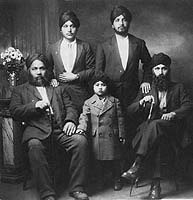 "The Sikhs who shivered in our docks a few years ago now own farms, town lots, houses, motorcars, horses engage in dairying have almost captured one branch of the food market and large real estate speculators. Let us be frank about it the reason we want to keep the Hindu out is one part because he is not of our race, in part because he is not of our religion, although some who themselves overburdened with any religion lastly we object in part because he is ready to compete with white people in any sphere of activities in which he can get a foothold and make good." (Colonist)